Best Places to Stay in Cape Town: Neighbourhood & Hotel Guide
I’ve had more “where should I stay?” messages from visiting friends-of-friends than I can count, and my answer is always the same: it depends entirely on what you want your mornings to look like. Cape Town isn’t one city with one vibe; it’s a scattering of very different neighbourhoods stitched together by mountain roads, and picking the wrong one means you’ll spend your trip in traffic instead of on a beach. This guide is the version of that conversation I’d have with you over coffee, minus the bits where I get distracted.
Quick Answer: Where to Stay in Cape Town
If you only read one table, read this one.
|
Travel Style |
Best Area |
Why |
|---|---|---|
|
First-timers & sunset lovers |
Atlantic Seaboard (Camps Bay & Sea Point) |
Iconic views, beach culture, easy first impression |
|
Safety & convenience |
V&A Waterfront / Green Point |
Walkable, well-lit, close to attractions |
|
Foodies & nightlife |
City Bowl & Gardens (Kloof Street) |
Best restaurants, bars, and gallery scene |
|
Coastal vibe & surfing |
Kalk Bay & Muizenberg |
Laid-back, surf culture, away from the crowds |
Keep scrolling for the full breakdown of each area, including where to actually book your stay, as well as a Cape Town Cheat Sheet.
Atlantic Seaboard: Camps Bay & Sea Point
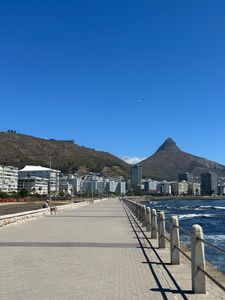
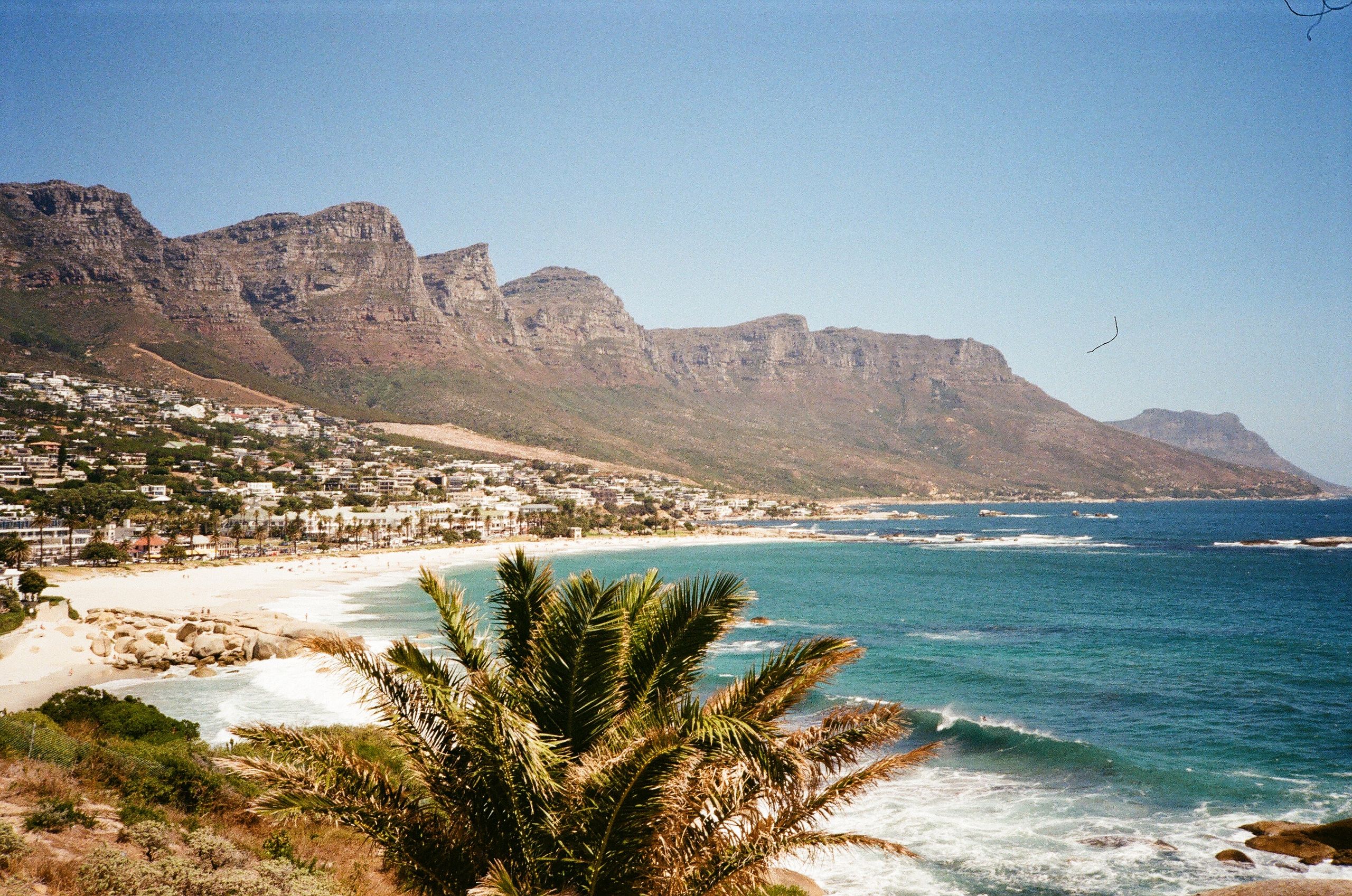
Camps Bay is the postcard. Palm-lined promenade, a strip of restaurants facing the ocean, and Table Mountain’s Twelve Apostles rising behind you. It’s glamorous, a little see-and-be-seen, and genuinely one of the best places on earth to watch a sunset with a glass of wine in hand. Sea Point, just along the coast, is quieter and more residential, with a long promenade that locals actually use for their morning walk or run.
Pros and cons of Camps Bay:
- Pro: unbeatable sunset views and beach access
- Pro: excellent restaurants within walking distance
- Con: prices climb hard in December and January.
- Con: it gets windy! The notorious “Cape Doctor” southeaster can ruin a beach afternoon with zero warning.
- Con: limited affordable options; this is one of the pricier pockets of the city
Pros and cons of Sea Point:
- Pro: more budget-friendly than Camps Bay while still being on the coast
- Pro: the promenade is flat, safe, and great for walking or cycling
- Con: the beaches here are rocky, not swimmable in the way Camps Bay or Clifton are
- Con: fewer standout restaurants than the City Bowl
Who it’s for: couples on a romantic first trip, honeymooners, and anyone who wants their Instagram feed sorted without much effort. Sea Point suits families and slightly older travellers who want coastal air without the Camps Bay price tag.
Hotel picks for the Atlantic Seaboard:
- Luxury: POD Camps Bay — sleek, adults-focused, right on the strip
- Mid-range: President Hotel, Sea Point — reliable, sea-facing rooms, good value for the location
- Budget: Ashanti Lodge Gardens or a Sea Point guesthouse — clean, simple, walkable to the promenade
V&A Waterfront & Green Point

This is my go-to recommendation for first-time visitors who want zero logistical stress. The Waterfront is a working harbour turned shopping-and-dining precinct, and it’s genuinely one of the safest, most tourist-friendly patches of the city — well-lit at night, full of security, and walkable even after dark. Green Point, just behind it, is a flatter, more residential extension with the stadium, a lovely urban park, and easy access to Sea Point’s promenade.
Pros and cons:
- Pro: consistently the safest area to base yourself, especially for solo travellers
- Pro: everything from the aquarium to ferries to Robben Island is on your doorstep
- Pro: flat streets and short, cheap Uber rides to most attractions
- Con: it can feel a bit like a shopping mall with sea views rather than “real” Cape Town
- Con: hotel prices here don’t dip much, even off-season
Who it’s for: families, first-timers, business travellers, anyone prioritising ease and safety over local texture.
Hotel picks for the Waterfront and Green Point:
- Luxury: The Silo — part of the Zeitz MOCAA building, genuinely one of the most striking hotels on the continent
- Mid-range: Radisson Blu Waterfront or a Green Point guesthouse near the park
- Budget: Cape Town Ritz or a Green Point backpackers — further from the main strip but still an easy Uber
City Bowl & Gardens (Kloof Street)
This is where I’d stay if it were purely my choice. The City Bowl is central Cape Town proper — Bo-Kaap’s coloured houses, the Company’s Garden, and Kloof Street’s run of small-plates restaurants, wine bars, and independent coffee shops. Gardens, just up the hill, is leafier and quieter but still walking distance to everything. This is the area with the most going on after dark, and the most character during the day.
Pros and cons:
- Pro: best restaurant and bar density in the city, all walkable
- Pro: central location cuts down on Uber time to almost everywhere
- Pro: real neighbourhood feel — actual Capetonians live and work here
- Con: parts of the CBD get quiet and best avoided on foot late at night
- Con: no beach on your doorstep; you’re a 15–20 minute drive from the coast
Who it’s for: foodies, solo travellers who want a walkable base, couples who’d rather eat well than lie on sand every day.
Hotel picks for the City Bowl:
- Luxury: Gorgeous George — design-forward, right on Kloof Street
- Mid-range: Taj Cape Town or a Gardens guesthouse
- Budget: 91 Loop Hostel — well-run, central, popular with solo travellers
Kalk Bay & Muizenberg
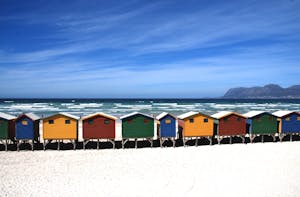
These are the two I send people to when they say they’ve “done” Cape Town before and want something different. Both sit along the False Bay coast, about 25–40 minutes from the centre depending on traffic. Kalk Bay is a working fishing harbour with antique shops and a couple of excellent seafood spots; Muizenberg is the surf town, with its famous row of Victorian beach huts and a genuinely warm community feel.
Pros and cons:
- Pro: warmer swimming water than the Atlantic side and a proper surf scene
- Pro: slower pace, lower prices, more local character
- Pro: gorgeous train line along the coast if you’re not driving
- Con: you’re committing to a daily commute if your priority is the City Bowl’s restaurants or the Waterfront’s attractions
- Con: some pockets of Muizenberg still need a bit of street smarts after dark
Who it’s for: surfers, longer-stay travellers, families wanting a slower holiday, anyone who’s already ticked off the main sights.
Hotel picks for Kalk Bay and Muizenberg:
- Luxury: Whale Cottage Muizenberg or a boutique Kalk Bay guesthouse
- Mid-range: Days on the Bay or similar sea-facing guesthouses
- Budget: Sunflower Stop Backpackers — a Muizenberg institution for surfers on a budget
Areas to Approach with Caution
I’d rather be direct about this than dance around it, because it genuinely affects your trip. Cape Town has huge disparities in safety between neighbourhoods, sometimes street by street.
- Don’t walk solo, especially at night, through the parts of the central CBD away from Long Street and the main restaurant strips — this includes areas near the lower station precinct.
- Long Street itself is fine early evening but gets rowdier and less predictable late at night; take an Uber home rather than walking, even if it’s a short distance.
- Avoid wandering into unfamiliar residential pockets on foot after dark anywhere in the city, Waterfront and Green Point excluded — these two are consistently the most secure for evening walking.
- If you’re staying in Muizenberg or Kalk Bay, stick to the main beachfront and harbour areas after sundown rather than side streets you don’t know.
Staying central vs. commuting from the outer suburbs
A lot of first-timers get tempted by cheaper accommodation in Bloubergstrand (famous for its Table Mountain view across the bay) or the Southern Suburbs (leafy, residential, near the university). Both are lovely, but neither is close to anything else.
- Bloubergstrand: gorgeous view, but you’re 25–40 minutes from the centre with no quick public transport option — you’ll need a car or be booking Ubers constantly.
- Southern Suburbs (Newlands, Claremont, Rondebosch): great if you’re visiting family or attending something at the university; otherwise, it adds unnecessary daily driving to a holiday that should mostly happen closer to the coast and centre.
My rule of thumb: unless you have a specific reason to base yourself further out, staying central costs you a bit more per night but saves you real money and time on transport.
Local Logistics & Booking Tips
Book earlier than you think you need to. Summer here runs December through February, and it’s also our peak season — the good guesthouses in Camps Bay and Kalk Bay sell out four to six months ahead, especially over the December holidays when half of Johannesburg relocates south for the summer.
Getting around, area by area:
- V&A Waterfront, Green Point, City Bowl, Sea Point: Uber is fast, cheap, and honestly the easiest way to get around. A car adds parking stress you don’t need.
- Camps Bay: Uber works well, though prices spike during peak sunset hours when everyone’s heading the same direction.
- Kalk Bay & Muizenberg: doable without a car if you’re staying put, but you’ll want either a rental car or to budget for longer Ubers if you plan to explore the Cape Peninsula, Boulders Beach, or Cape Point.
- Bloubergstrand & Southern Suburbs: a rental car is close to essential here — public transport and Uber availability both thin out.
If you’re planning to do the Cape Peninsula drive, the Winelands, or anything outside the city bowl in a single day, renting a car for a few days of your trip — even if you’re Uber-based the rest of the time — will save you money and give you far more flexibility than trying to book a private tour for every excursion.
Final Thoughts
There’s no single “best” neighbourhood in Cape Town — there’s a best neighbourhood for the trip you’re actually taking. First-timers who want the postcard experience should lean Atlantic Seaboard or the Waterfront. People who want to eat and drink well without getting in a car every night should be in the City Bowl. And if you’ve already done the highlights and want to feel the city’s slower, saltier side, Kalk Bay and Muizenberg will give you that. Wherever you land, book early, take Ubers after dark in unfamiliar areas, and give yourself at least one night watching the sun go down from the coast — that part never gets old, no matter how many times I’ve seen it. Have a look at the Cape Town Travel Guide: The Ultimate Local Insider Cheat Sheet to find everything you need to know.